 how-to
Metal Building Spray Foam: A How-To Guide
Table of Contents
- What You Need to Know Before Starting
- Open-Cell vs. Closed-Cell Spray Foam for Metal Buildings
- Preparing Your Metal Building for Spray Foam Application
- Step-by-Step Installation Process
- Metal Building Condensation Control With Spray Foam
- Spray Foam Cost for a Metal Building
- Common Installation Mistakes to Avoid
- DIY vs. Professional Installation
- Frequently Asked Questions
Last Updated: October 9, 2026
What You Need to Know Before Starting
Metal building spray foam insulation is one of the most effective ways to control temperature, reduce condensation, and improve energy efficiency in steel structures. Whether you're building a barndominium, workshop, or agricultural facility, understanding the basics will help you make informed decisions.
The key to success lies in proper preparation and choosing the right foam type for your climate. At DTF Metal Buildings, we've completed over 500 projects across South Texas, and most issues stem from inadequate planning rather than poor installation technique.
Before you start, you need to know three things: the difference between foam types, how moisture control works in metal structures, and whether your project requires professional installation or can be DIY. This guide walks you through each decision point.
Open-Cell vs. Closed-Cell Spray Foam for Metal Buildings
The choice between open-cell and closed-cell spray foam determines thermal performance, moisture management, and long-term durability.
Closed-cell spray foam is the industry standard for metal buildings in most climates. It has a higher R-value per inch (typically 6-7), so you need less material to hit your target insulation level. It creates a vapor barrier critical for condensation-prone metal structures, adds structural rigidity to metal panels, and resists moisture intrusion.
Open-cell spray foam is cheaper upfront but offers lower R-value (around 3.5 per inch). It's more permeable, allowing moisture through, making it unsuitable for metal buildings in humid climates like South Texas. It works better in dry climates where vapor barrier performance isn't critical.
For metal buildings, closed-cell is almost always the better choice:
- Superior thermal resistance in thin applications
- Acts as air sealing and vapor barrier in one material
- Adds structural support to metal panel systems
- Resists moisture and condensation effectively
- Better long-term performance in humid environments
Open-cell foam's one advantage is cost, but where condensation control matters, the savings disappear once you factor in moisture damage, mold growth, and reduced energy efficiency over time.
| Foam Type | R-Value per Inch | Vapor Barrier | Best For | Moisture Resistance |
|---|---|---|---|---|
| Closed-Cell | 6-7 | Yes | Metal buildings, humid climates | Excellent |
| Open-Cell | 3.5 | No | Dry climates only | Poor |
Preparing Your Metal Building for Spray Foam Application
Substrate Preparation and Adhesion
Proper substrate preparation determines whether your foam adheres correctly and performs long-term. Metal surfaces must be clean, dry, and contaminant-free.
Inspect metal panels for rust, dust, oil, or paint, any loose material prevents adhesion. Use a wire brush on rust and loose scale, and clean oily surfaces with a degreaser, allowing them to dry completely. Most adhesion failures happen because contractors skip or rush this step.
Surface temperature matters too. Spray foam bonds best between 50°F and 85°F; cold metal cures improperly and creates weak adhesion. In South Texas heat, apply foam early morning or late afternoon to avoid substrate temperatures above 90°F.
Check metal gauge and panel profile. Thinner metal (under 26 gauge) may flex under foam pressure, so discuss this with your applicator. Corrugated or ribbed panels need special attention at seams and valleys where foam can pool or bridge unevenly.
Safety and Environmental Protocols
Spray foam application involves chemicals requiring proper safety precautions. Polyurethane foam components irritate skin, eyes, and respiratory systems.
Applicators must wear:
- Respiratory protection (NIOSH-approved respirator)
- Chemical-resistant gloves
- Eye protection
- Protective clothing covering skin
Proper ventilation is essential. Open windows and doors for fresh air circulation, and keep people and pets away during application. Curing releases off-gassing that can irritate airways, especially in enclosed spaces.
After application, allow adequate curing before occupying the space. Most polyurethane foams need 24-48 hours, with ventilation continuing throughout. Don't seal the building completely until curing is complete.
Step-by-Step Installation Process
Step 1: Inspect and Clean Metal Surfaces
Walk the entire interior before foam application begins. Look for gaps, seams, or damaged areas where air can leak, and mark them so your applicator can address them.
Clean all surfaces with a dry brush or cloth, removing dust, debris, and loose material. Pay special attention to:
- Seams where panels overlap
- Areas around door and window frames
- Fastener holes and penetrations
- Rust spots or corrosion
Allow cleaned surfaces to dry at least 2-4 hours before application. Moisture interferes with adhesion and foam expansion.
Step 2: Seal Air Leaks and Gaps
Before applying spray foam, identify and seal major air leaks. Small gaps take caulk or foam sealant; larger gaps need blocking or filling.
Common air leak locations in metal buildings:
- Gaps between metal panels and frames
- Seams where roof meets walls
- Around penetrations for utilities
- Spaces at door and window openings
- Gaps where metal attaches to concrete
Use weatherstripping, caulk, or foam backer rod to seal these areas first. This reduces spray foam needed and improves thermal performance.
Step 3: Apply the Foam
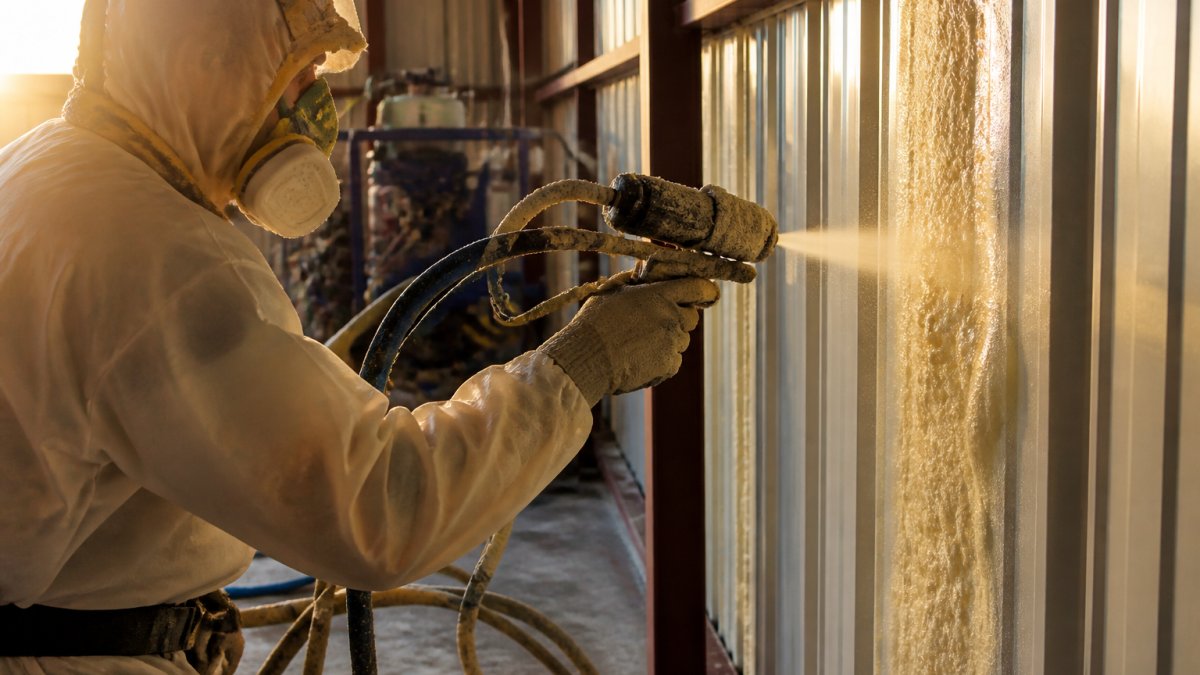
Spray foam application requires specialized equipment and training. The two-component mixture (polyol and isocyanate) must be mixed at precise ratios and applied at controlled pressure.
Application proceeds bottom to top in sections. The applicator holds the spray gun perpendicular to the substrate, moving in steady, overlapping passes. Each pass should be thin (1-2 inches) for proper expansion and curing.
For metal buildings, closed-cell foam depth ranges from 3-6 inches depending on climate zone and target R-value. South Texas applications typically use 4-5 inches.
Allow each section to cure slightly before applying the next layer. This prevents over-expansion and ensures uniform density.
Step 4: Cure and Finish
After application, allow proper curing. Closed-cell foam cures to 80% strength within 24 hours, but full cure takes 7-14 days depending on temperature and humidity.
During curing:
- Keep the building ventilated
- Avoid disturbing the foam surface
- Do not seal the building completely for at least 48 hours
- Monitor interior temperature (warmer speeds curing)
Once cured, trim excess foam flush with metal framing using a hot wire cutter or sharp utility knife. Some applicators leave it slightly proud of the framing to ensure complete coverage.
After trimming, foam can be left exposed (common in agricultural buildings) or covered with drywall, paneling, or vapor barrier for finished spaces like barndominiums.
Metal Building Condensation Control With Spray Foam
Condensation is the most serious threat to metal building durability. When warm, moist air contacts cold metal, moisture condenses and creates conditions for rust and corrosion.
Spray foam prevents condensation by raising the interior surface temperature of your metal panels. Cold metal conducts heat rapidly outward; foam breaks this thermal bridge, keeping the interior surface warmer.
Closed-cell foam is essential for condensation control because it also acts as a vapor barrier, preventing moisture-laden air from reaching the cold metal substrate.
In South Texas, where humidity is high year-round, condensation risk is significant. An uninsulated metal building can experience severe condensation on cool mornings or during air-conditioned use.
Monitor condensation in the first few weeks after installation. Moisture on the metal surface indicates inadequate thickness or incomplete coverage, address it immediately to prevent rust.
Spray Foam Cost for a Metal Building
Spray foam insulation cost depends on foam type, thickness, building size, accessibility, and whether you hire professionals or attempt DIY.
Closed-cell material costs vary by market conditions and supplier, and professional installation adds labor, equipment, and overhead. Pricing depends on quantity, dates, and delivery, so request a quote from DTF Metal Buildings for accurate current pricing.
Common cost drivers:
- Building square footage
- Desired R-value (thicker foam costs more)
- Accessibility (difficult-to-reach areas cost more)
- Existing conditions (rust removal, substrate prep adds cost)
- Geographic location and contractor availability
Closed-cell foam costs more per square foot than open-cell but delivers better long-term value in metal buildings through superior thermal performance and condensation control.
Get a written quote from a professional contractor before making budget decisions. DTF Metal Buildings provides free on-site consultations and written quotes within 24 hours, so you can decide based on your actual building conditions and climate needs.
Common Installation Mistakes to Avoid
Understanding what goes wrong helps prevent expensive problems.
Skipping substrate preparation is the most common error.
Applying foam too quickly causes uneven curing and poor adhesion. Rushing or applying thick single passes creates weak spots.
Ignoring air sealing before application wastes material and reduces performance. Seal large gaps with caulk or backer rod first to improve efficiency and cut costs.
Using open-cell foam in humid climates is a costly mistake. It absorbs moisture, loses insulation value, and creates conditions for mold and corrosion.
Inadequate ventilation during application and curing exposes occupants to off-gassing and chemical irritation. Proper ventilation is a safety requirement, not optional.
Insufficient foam thickness for your climate zone leaves inadequate thermal resistance and condensation risk. Calculate your target R-value based on local climate before starting.
Failing to trim excess foam creates rough surfaces that collect dust and get damaged. Properly trimmed foam looks cleaner and performs better.
DIY vs. Professional Installation
Deciding between DIY and professional installation depends on your skills, equipment access, and project complexity.
Professional installation is recommended for most metal buildings because:
- Applicators have specialized spray equipment
- They understand foam chemistry and mixing ratios
- They diagnose substrate issues and make corrections
- They carry insurance and warranty their work
- They finish faster and more efficiently
- They follow safety protocols and handle off-gassing properly
DIY spray foam is possible for small projects but has significant limitations:
- Equipment rental costs are high for small jobs
- Improper mixing ratios ruin material and waste money
- Poor technique creates weak adhesion
- Safety risks are higher without training
- Mistakes are expensive to fix
For most South Texas homeowners and business owners, professional installation through DTF Metal Buildings makes financial sense.
If you're considering DIY, start with a small test area to learn the technique before committing to the entire building. Many people discover professional installation is more cost-effective than expected.
DTF Metal Buildings has completed over 500 metal building projects with spray foam insulation. We understand South Texas climate challenges and deliver customized solutions engineered for local conditions. Contact us for a free on-site consultation and written quote within 24 hours.
Spray foam insulation for metal buildings requires careful planning and proper execution, but the payoff in energy efficiency, condensation control, and durability is substantial.
Frequently Asked Questions
Will spray foam stick to metal?
Yes, spray foam adheres well to metal when the surface is properly prepared. Clean the metal panels to remove dust, rust, and oils, then lightly sand the area for better substrate adhesion. Closed-cell foam typically provides stronger bonding than open-cell on metal surfaces. Proper surface preparation is critical, without it, foam may not cure correctly or could separate over time.
Is open-cell or closed-cell spray foam better for a metal building?
Closed-cell spray foam is generally better for metal buildings, especially in humid climates. It provides superior vapor barrier properties, preventing condensation and moisture infiltration. Closed-cell also offers higher R-value per inch and better structural rigidity. Open-cell is softer, cheaper, and allows moisture to pass through, making it less ideal for metal structures where condensation control is critical.
Can spray foam help prevent condensation in a metal building?
Yes, closed-cell spray foam is highly effective for condensation control in metal buildings. It acts as a vapor barrier, preventing warm interior air from reaching the cold metal surface where dew point conditions form sweating. By reducing thermal bridging and maintaining consistent interior temperatures, spray foam minimizes the conditions that cause condensation buildup on metal panels and roofs.
What factors affect spray foam cost for a metal building?
Cost depends on several factors: building size, foam type (open-cell vs. closed-cell), thickness requirements, metal gauge and panel configuration, site accessibility, and whether you choose professional installation or DIY. Closed-cell foam costs more per square foot than open-cell but delivers better R-value and vapor protection. For an accurate quote tailored to your metal building's specifications and local climate zone, contact a professional contractor.